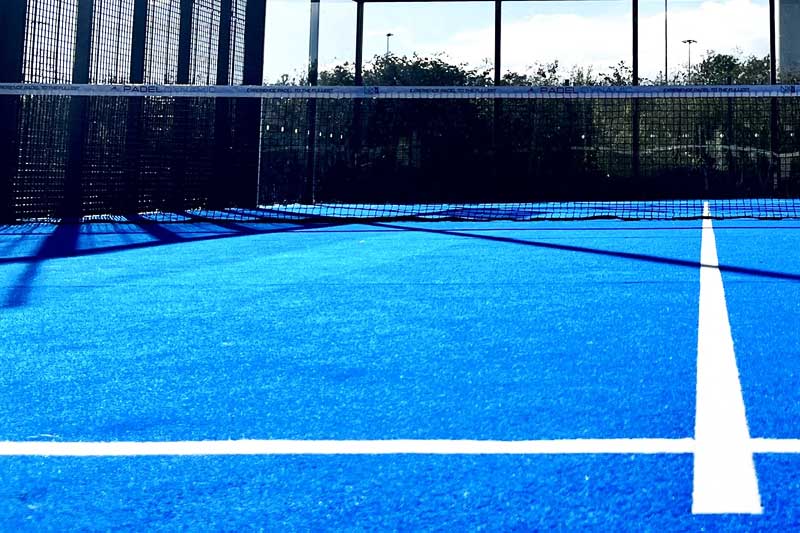
Understanding the Essential Padel Net Dimensions and Height
The Padel Net Height Regulations: FIP Standards & Optimal Play are fundamental to the sport, dictating the boundaries of play and ensuring fair competition. At the heart of every professional padel court lies a net designed with meticulous precision, adhering to strict international standards. Understanding these specifications is crucial, not just for manufacturers and court builders, but for players who wish to fully grasp the nuances of their game.
A professional Padel Net is a precisely engineered piece of equipment. Its standard regulatory length spans 10 meters (approximately 32 feet 9 inches), ensuring it perfectly fits across the width of a standard padel court. However, the height is where the true precision comes into play. While the net stands at a consistent 0.92 meters (about 36 inches) at both ends where it attaches to the posts, it dips slightly to 0.88 meters (approximately 34.6 inches) at the very center of the court. This subtle difference is intentional, contributing to the unique dynamics of padel play and is a hallmark of FIP (International Padel Federation) regulations.
Precision in Padel Net Height: The FIP Mandate
The International Padel Federation (FIP) meticulously outlines these net height specifications to maintain uniformity and integrity in all sanctioned tournaments and professional play. This strict adherence ensures that whether you're playing in Madrid, Miami, or Dubai, the core element of the game—the net's height—remains consistent. This consistency is vital for players to develop reliable strategies and shots, as even slight deviations can drastically alter gameplay. For instance, a net that is too high might encourage overly aggressive, lob-heavy play, while one that is too low could lead to an abundance of smash returns and reduce rallies.
Maintaining the correct height isn't just about initial setup; it also requires proper tensioning. A well-tensioned Padel Net prevents sagging and ensures that the ball reacts predictably, allowing for a consistent bounce that is crucial for developing effective shots and strategies. Regular checks before matches are highly recommended to verify that the net meets these precise height requirements, preventing potential disputes and ensuring a fair contest. For a deeper dive into how this impacts your game, explore The Critical Padel Net: How Height Affects Your Gameplay.
The Anatomy of a High-Performance Padel Net: Materials and Durability
Beyond its dimensions, the materials and construction of a professional Padel Net are paramount to its performance and longevity. Designed to withstand the rigors of intense play and the unpredictable elements, these nets are a testament to advanced material science and manufacturing techniques.
Core Netting Material: High Tenacity Polypropylene
The primary material for the netting itself is typically high tenacity polypropylene. This synthetic fiber is chosen for several key reasons:
- Exceptional Strength: Polypropylene offers superb tensile strength, allowing the net to absorb impacts from high-speed balls without tearing or stretching excessively.
- Durability: It is highly resistant to wear and abrasion, crucial for equipment that sees constant action.
- Weather Resistance: Polypropylene naturally repels water and resists mildew, making it ideal for outdoor courts.
- UV Stabilization: Professional nets undergo specific treatments, often heat-fixed in an autoclave and stabilized against UV rays. This process is critical for preventing degradation from prolonged sun exposure, ensuring the net retains its strength and color over many years. Without proper UV stabilization, a net can quickly become brittle and disintegrate.
The netting is typically constructed with a 45x45 mm (approximately 1-3/4 inch) square mesh. This specific mesh size is optimal as it's small enough to prevent a padel ball from passing through, yet large enough to maintain visibility for players on both sides of the court. The individual "wire" or twine diameter, often around 5 mm, contributes significantly to the net's overall robustness and resistance to impact.
Reinforcement and Finishing: Tapes, Cables, and Stitching
The raw netting is only part of the story; its finishing and reinforcement are equally vital for a professional-grade Padel Net:
- High Tenacity PVC Taping: The top edge of the net is finished with a distinct white high tenacity PVC tape, typically 6 cm high. This white band serves multiple purposes: it clearly defines the top edge of the playing area, provides an additional layer of strength where the net experiences the most impact, and offers excellent visibility against the court background. The two vertical sides and the lower part of the net are reinforced with black high tenacity PVC tape, often incorporating eyelets for secure attachment.
- Steel Tensioning Cable: Integrated into the upper part of the net is a robust 5 mm diameter steel cable, frequently vinyl-coated for protection against rust and wear. This cable is the backbone of the net's tensioning system, allowing it to be pulled taut to achieve the precise 0.88m center height and maintain its structural integrity during play. Professional cables boast high break strength (e.g., 2300 lbs), ensuring reliable performance.
- Binding Rope: A binding rope is usually included for the lower part of the net, providing additional stability and ensuring the net remains consistently taut along its entire length.
- Superior Stitching: The PVC headband and tapes are typically lock-sewn with multiple rows (e.g., four rows of #32 polyester thread). This heavy-duty stitching ensures that the reinforced edges remain securely attached to the netting, preventing fraying and extending the net's lifespan even under constant stress.
Construction Excellence: What Makes a Professional Padel Net Stand Out?
The sum of these parts—premium materials, precise dimensions, and meticulous construction—is what truly defines a professional Padel Net. It's an investment in the integrity of the game and the safety of the players. The difference between a high-quality, regulation-compliant net and a lesser alternative is often immediately apparent in play and durability.
Beyond Basic Requirements: Craftsmanship and Longevity
Craftsmanship in a padel net translates into a product that not only meets but often exceeds basic performance expectations. For instance, the UV stabilization and heat-fixing process mentioned earlier are not merely features but critical treatments that dramatically extend the net's operational life, especially for outdoor courts exposed to harsh sunlight year-round. A well-constructed net resists premature sagging, tearing, and material degradation, meaning less frequent replacement and consistent play conditions.
While recreational nets might offer some flexibility in material and construction, professional-grade nets leave no room for compromise. They are built to endure the force of countless powerful shots, maintain precise dimensions under varying environmental conditions, and provide a clear, unambiguous barrier that defines the playing field. This attention to detail ensures that competition remains fair and focused solely on player skill.
Practical Tips for Padel Net Maintenance and Longevity
To maximize the lifespan and performance of your professional Padel Net, consider these practical tips:
- Regular Tension Checks: Periodically verify that the net is properly tensioned to maintain the correct height. Overtightening can stress the net and posts, while undertensioning leads to poor play.
- Cleanliness: Gently clean the net using mild soap and water to remove dirt, dust, and mildew. Avoid harsh chemicals that could degrade the polypropylene or PVC.
- Inspect for Damage: Regularly check for any signs of fraying, tears, or damage to the netting, tapes, or tensioning cable. Address minor issues promptly to prevent them from escalating.
- Protect from Extreme Weather: While designed for elements, in extreme weather conditions (e.g., hurricanes, blizzards), consider temporarily lowering or removing the net if possible to prevent undue stress.
- Proper Installation: Ensure the net is installed by professionals or according to manufacturer guidelines to guarantee correct tension and prevent unnecessary wear on attachment points.
Choosing the Right Padel Net for Your Court
When selecting a Padel Net, whether for a professional facility, a competitive league, or a high-end private court, several factors should guide your decision to ensure optimal play and long-term satisfaction.
Factors to Consider for Optimal Play
- Compliance with FIP Standards: For any competitive or professional setting, ensuring the net adheres to FIP specifications for length, height (0.88m center, 0.92m ends), mesh size, and material quality is non-negotiable.
- Material Quality: Prioritize nets made from high tenacity, UV-stabilized polypropylene with robust PVC reinforcement tapes and a strong, vinyl-coated steel tensioning cable. These materials offer the best combination of durability and performance.
- Construction Excellence: Look for nets with heavy-duty, lock-sewn stitching that promises longevity and resistance to wear. Attention to detail in manufacturing signifies a superior product.
- Supplier Reputation: Choose reputable manufacturers known for producing high-quality padel equipment. A reliable supplier will stand behind their products with warranties and excellent customer service.
- Intended Use: While professional specs are ideal, for very casual backyard play, some flexibility might be acceptable, but for serious players, investing in a regulation-compliant net significantly enhances the experience.
Conclusion
The professional Padel Net is far more than just a barrier; it's a meticulously engineered component that defines the game. From its precise regulatory dimensions of 10 meters in length and varying heights of 0.88m at the center and 0.92m at the ends, to its construction from high tenacity, UV-stabilized polypropylene, reinforced with robust PVC tapes and a strong steel tensioning cable, every specification contributes to fair play, consistent ball dynamics, and lasting durability. Understanding these details empowers players and facility managers alike to appreciate the subtle yet critical role the net plays in every serve, volley, and smash, ensuring an authentic and exhilarating padel experience.